The new 3.0Ah Makita BL1830B pack that’s been reliable for 2 years suddenly won’t take a charge, and the charger blinks red like it’s personally offended. If sounds familiar, you’re dealing with one of the most common failures in Makita 18V LXT system — and the BL1830B is usually at the centre of it. After working through hundreds of these packs across Australian workshops and backyard sheds, here’s what actually matters: what fits, what kills them, and what to do when yours won’t come back.
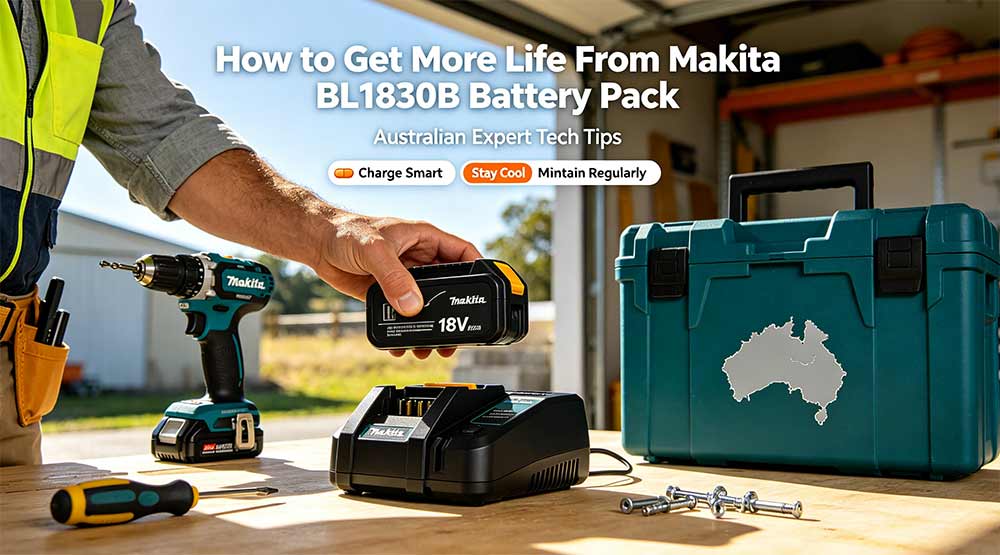 BL1830B is Makita’s 18V LXT lithium-ion pack rated at 3.0Ah / 54Wh. It weighs about 640g with the slide-on skin and charges in 22 minutes on a DC18RC fast charger, or around 60 minutes on the DC18SD.
A 3000mAh Makita power tool battery pack is fine for a drill or impact driver. On a 125mm angle grinder doing continuous cutting, you’ll get maybe 20 minutes before low-voltage cutoff kicks in. On a 185mm circular saw ripping hardwood, expect less. That’s not a fault — it’s just the energy budget.
Improper daily use and storage often lead to premature capacity loss, shortened runtime, and frequent replacements. Battaussie industry experts share practical, Australia-specific tech tips to extend your
Makita BL1830 battery lifespan and maintain stable long-term performance.
First, avoid deep discharge and overcharging, the top two causes of battery degradation. Never drain the BL1830B battery to zero power; recharge it promptly when tool power weakens, ideally at 20% remaining capacity. Stop recharging once fully charged, as continuous overcharging damages internal lithium cells and reduces cycle life significantly.
Temperature control is critical for Australia’s variable climate. Always charge the battery at a mild room temperature of 10–40°C. Avoid charging or leaving batteries under direct summer sunlight or inside hot vehicle cabins, and let overheated batteries cool fully before recharging.
For idle maintenance, store unused
Makita BL1830B batteries at 40–60% charge in a cool, dry, ventilated space. Remove batteries from tools after use and recharge dormant units every 3 months to prevent low-voltage damage. Regularly clean metal terminals with a dry cloth to remove dust and dirt, ensuring stable power connection and optimal battery efficiency.